


ABOUT US and about
JEWISH ITALIAN MUSIC

Our Story
Formerly known as Ensemble Bet Hagat, Ensemble Nuria is an international ensemble based in Ein Karem, Jerusalem.
Founded by Ayela Seidelman, it is a modular ensemble focussing on the symbiosis of early Jewish music with the neighboring cultures surrounding and permeating it, and is devoted to celebrating and communicating respect and tolerance between diverse backgrounds, faiths and cultures.
Inspired by the critically important work of the ethnomusicologist Leo Levi, it is proud to pioneer the revived performance of the nearly lost musical heritage of Italian Jewry and to revitalize traditional piyyutim with a pluralistic, contemporary voice.
.jpg)
Get to Know Us
Our Amazing Team
Meet the talented individuals who make up ensemble nuria. Each member brings their unique skills and passion for music, creating a harmonious blend that captivates audiences.

Artistic director and cellist
Born and raised in Canada, Ayela Seidelman moved to Israel at the age of 18. She received her BMus degree from the Jerusalem Academy of Music, where she studied with Shmuel Magen, and her MMus from Rice University, where she studied cello performance with Paul Katz, with a minor in Religious Studies. She was also a pupil of Zdenek Konicek, Janos Starker, and Ofra Harnoy. Ms. Seidelman studied Baroque cello and early music performance at the Istituto Vittadini in Pavia, Italy, and was a member of the Israel Camerata Orchestra. She has released groundbreaking recordings of early Jewish music on the Brilliant Classics and Stradivarius labels. Ayela was a longstanding faculty member at the Jerusalem Conservatory Hassadna, where she taught cello and chamber music for over a decade. She is founder, researcher and artistic director of Ensemble Nuria (formerly Ensemble Bet Hagat). Her main projects with Ensemble Nuria- focussing on reviving early Italian Jewish Music, and fostering intercultural dialogue and tolerance through Jerusalem’s diverse sacred music- are supported by the Israeli Ministry of Culture and the Jerusalem Municipality. She enjoys nature, outings with her family, and wintery days, and feels privileged to be working on bringing to light nearly lost, beautiful music with exceptionally talented friends in Ensemble Nuria.
%20(2).jpg)
Theorbo, Lute, Baroque guitar and Musical arrangements
Bari Moscovitz
A graduate in composition from the Jerusalem Academy of Music and Dance, Bari Moscovitz also completed graduate studies at the Istituto Vittadini in Pavia, Italy where he specialized in lute, theorbo and early music with Massimo Lonardi. Dedicated to the performance of early music- specifically early Jewish music, Bari has released recordings as a soloist and chamber musician with Naxos, Brilliant Classics, Stradivarius and Ortav. In addition to his work as a performer and arranger, Bari heads the music department at Harel High School outside of Jerusalem, and teaches lute and history of music at the Magnificat Academy in Jerusalem’s old city. Bari creates the original arrangements for all of Ensemble Nuria’s repertoire, as well as performing on the lute, theorbo and baroque guitar with the group. Bari is a lifelong fan of Maccabi Haifa and father to 3 children and 2 dogs.

vocalist
David Lavi
David Lavi is a Jerusalem-based artist whose talents span singing, songwriting, acting, and music production.
Recognized for his deep music interpretations and nuanced vocal performances, Lavi also applies his work
acting in tv dramas, musicals, and behind the scenes, producing music for television and films. His work
resonates with the rich cultural fabric of Jerusalem, where he continues to contribute his distinctive voice and
vision.

Vocalist
Yair Harel
Yair Harel is a world renowned Israeli performer, singer, artistic director, teacher, and community activist. He is a
leader in the revival and contemporary interpretation of the ancient art of Piyyut, which has revolutionized the
face of Israeli culture in the past decade. Founder and editor in chief of the ‘Invitation to Piyyut’ website and
artistic director of ‘the Piyyut Ensemble’.

Vocalist
Keren Kedem
Born and raised in Jerusalem, the vocalist Keren Kedem is a mother of three beautiful children, who began her musical path at age 6. Keren performed as a member of the renowned Ankor choir and as a soloist, and studied voice at both the high school and high Academy of Music and Dance in Jerusalem. Keren has also worked for
many years in several of Jerusalem’s foremost culinary institutions as a producer and director.

Vocalist
Father Alberto Joan Pari
The vocalist Father Alberto Joan Pari is an Italian Catholic Franciscan priest who has lived in Israel since 2007.
He studied pedagogy in Italy and completed his studies in theology in Jerusalem. Fr Pari has a BA in Holy
Scripture and biblical archeology and is also a singer, flutist, zither player, and teacher of Gregorian chant.
Director of the Magnificat Music School in Jerusalem’s Old City and lover of the beauty of inter-religious dialogue.

Baroque Violin
Refael Negri
Based in Milano, Refael Negri is a professor of modern and baroque violin at the Conservatorio Luca Marenzio
in Brescia, Italy. Prof. Negri performs worldwide with Fabio Biondi’s ‘Europa Gallante’ early music group, as well
as with Ensemble Nuria, the Jerusalem Baroque Orchestra, and the Tel Aviv Soloists. Refael has performed on
CD’s released with EMI, Opus 111, Brilliant Classics, Stradivarius, and others.

Baroque and Klezmer Violin
Daniel Hoffman
Daniel Hoffman is a violinist, composer and documentary film producer, and is among the top players of the
klezmer fiddle style. He is the co-founder of the US-based groups Davka, the Klez-X, and the Israeli group Trio
Carpion. He also plays Turkish music and related traditions, and has performed with a dizzying array of
performers from disparate genres, and plays Jewish Violin with Ensemble Nuria.
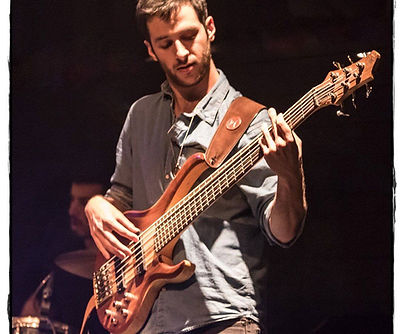
Bass Colascione
Ben Har-Ga’ash
A graduate of the music department of Harel high school in Mevaseret Zion, the New-york based bass and
bass-colascione player Ben Har-Ga’ash has played with some of Israel’s greatest artists both on stage and in
the studio. His uniquely diverse musical taste has allowed him to work with a wide range of artists and genres,
from pop-rock to electronic jazz fusion, as well as early music with Ensemble Nuria. Currently a student at the
Manhattan school of music, Ben continues to work as a session musician, music teacher, and music director.

Recorders
Adi Silberberg
Adi Silberberg is a cross-genre creative musician in styles such as early music, world music, pop, rock,
electronic music, avant-garde, and Jewish music. As a multi-instrumentalist he performs on instruments from the
woodwind family, plucked and bowed string instruments, and different kinds of claviers. He’s also considered to
be one of Israel’s leading recorder artists, and is active in research and teaching in different fields of music.
Amongst his hobbies: acro-yoga and traveling.

Clarinet
Mati Bobek
The clarinetist Mati Bobek lives in the Judean Mountains near Jerusalem, where he raises a family and treats
children and adults with Music Therapy. He received his BMus from the Mannes School of Music in Manhattan
where he studied with David Krakauer. Mati believes that music has the power to connect and to strengthen the
will.

Baroque Bassoon
Richard Paley
Richard Paley is the principal bassoonist of the Jerusalem Symphony Orchestra, whose 40-year career
encompasses a prolific range of preeminent orchestral, chamber music, and teaching positions. Richard is a
founding member of Israel’s premier contemporary music group, as well as a pioneer in early music performance
in Israel. He is adjunct professor of bassoon and chamber music at the Buchmann-Mehta School of Music at Tel
Aviv University, and is widely acclaimed as a devoted teacher of aspiring young musicians.

Percussion
Abe Doron
Born and raised in Mexico, the percussionist Abe Doron is the founder of the ‘Peimot Center for Drumming and Percussion’ in Jerusalem. Abe is known to audiences worldwide as the percussionist of the renowned Irish ‘Riverdance’ group, having performed over 1200 venues worldwide with the show. He has performed and recorded with acclaimed artists worldwide, and enjoys giving workshops on drumming and percussion.

Sound engineer
Yuval Amit
Recording talented musicians for more than 25 years, sound technician Yuval Amit is still trying to get the perfect
mix but also, equally important, trying to create the perfect hummus and keeping a constant flow of ‘dad-jokes’
around the house.
%20(1).jpeg)
Project Production
Itamar Ben Moshe
Producer of diverse art and music events, Itamar Ben Moshe is owner of the ‘Beit Ha-Ma’ayan’, a unique venue
for intimate cultural gatherings in the Ein Karem neighborhood of Jerusalem. Itamar also specializes in teaching
breath therapy and workshops offering guidance through life processes.
Discography


About Italian-Jewish music:
‘Illumination II: Italian-Jewish Music of Solace and Hope’ presents Ensemble Nuria’s (formerly Ensemble Bet Hagat) second collection of traditional Italian-Jewish music, nearly lost to the world after the devastation of Italian Jewry during the Holocaust. As in our previous album, ‘Illumination: Early Italian-Jewish Spiritual Music’, many of the traditional Italian-Jewish ‘piyyutim’ recorded here are widely unfamiliar to the general public.
The Italian-Israeli ethnomusicologist Leo Levi dedicated the decades following WWII to the task of recording the last remnants of Italian-Jewish synagogue music in 20 different Italian-Jewish communities. Thanks to his singularly prescient undertaking, Levi succeeded almost single handedly at preserving the treasure which is Italian-Jewish traditional music. Had he not sacrificed years of his life to attain these rare field recordings at the precise moment in history in which he did so, the community elders who had maintained these centuries-old musical traditions would certainly have been no longer, and thus nearly all traces of this extraordinary musical and cultural legacy would have vanished.
The Jewish and Christian Italian cultures of the Renaissance and Baroque period were at once separate and also intricately connected, and synagogue music itself has always adapted and reflected contemporary- ostensibly unrelated- melodies and styles. It was thus a natural step to present works from the early spiritual music of Jewish Italy (all whose texts were in use as early as 1600 and even before) seen through the prism of the prevalent musical styles of the same period in while Salamone Rossi and Benedetto Marcello’s own important synagogue-based works were created: the Renaissance and Baroque periods. As specialists in early Italian music, this involved interpreting which contemporary styles of music predominant outside of the ghetto in Italy at that time were likely reflected in the Jewish works (which would themselves have been performed- during synagogue services- vocally only). The task of reviving these pieces and presenting them in the fuller context of the Italian culture that they inhabited was fascinating, as the works revealed themselves in their unique beauty and spirit.
The Italian Jewish community of the late Renaissance and Baroque was subdivided into four distinct groups, each of which maintained their own synagogue and identities within the general Jewish community. The Italyani and Bnei Romy were the original and most ancient of the Italian Jewish communities, descended in part from the exiles brought to Rome from the land of Israel after the destruction of Jerusalem in 70 CE. It is thought that given the antiquity of these communities' origins it is possible that the rites contained in their prayerbook are a direct remnant of the Jewish community of the land of Israel, prior to the exile to Rome. The Sephardim were descended from the communities of Spanish and Portugese Jews exiled during the Inquisition. The Ashkenazim were descended from German Jewish communities, exiled in the 15th century, who settled in Northern Italy. The fourth community, ‘APAM’ (for the Hebrew letters signifying Asti, Fossano and Moncalvo), settled in Northwestern Italy after being expelled from France in the late 14th Century.
Musical Sources we explore :
Recorded archival source material used in transcriptions:
Leo Levi collection and Jewish Music Research Center (Hebrew University of Jerusalem) collections via: ‘An Invitation to Piyut’ website of the Jewish National Library
‘Italian Jewish Musical Traditions’ from the Leo Levi Collection (CD; Edited by Francesco Spagnolo) Rome/Jerusalem (Jewish Music Research Center-2001)
National Sound Archive, Israel National Library
The Online Thesaurus of Italian-Jewish Liturgical Music